
This Isn’t “Yoga” Yoga…
Finding Safety, Not Flexibility
An 8-week Trauma Sensitive Yoga series for reconnecting with your body - no flexibility required.
A virtual, on-demand course that blends gentle, trauma informed movement with digestible education about how your body and mind work together after stress or trauma.
Each week includes a short teaching segment that helps you understand why your body responds the way it does - followed by a guided movement practice to help you experience what safety, choice, & connection can feel like in real time.
You’ll learn the science behind nervous system regulation, interoception, & self-trust - and practice applying that knowledge through movement and reflection.
The goal isn’t perfection or performance, but to cultivate awareness, compassion, and a renewed sense of relationship with your body.
Course Overview
Week 1: History of TCTSY:
Learn where Trauma-Centered Trauma-Sensitive Yoga (TCTSY) began, the research behind it, and how this approach differs from traditional yoga. Explore the guiding principles of invitational language, choice, and interoception.
Week 2: Self-Care, Burnout, Mindfulness
Understand the difference between “doing self-care” and feeling cared for. This week invites you to notice signs of burnout and introduces mindfulness practices that restore energy and presence rather than deplete them.
Week 3: Breathing & Breathwork
Discover how breath connects the mind and body. You’ll explore gentle ways to work with your breath — without forcing or controlling it — to create calm and regulation.
Week 4: Neuroscience of Trauma
Gain insight into what happens in the brain and body during stress or trauma. Understanding these processes helps replace shame with compassion and provides context for why certain responses are so hard to change.
Week 5: Polyvagal Theory
Learn how your nervous system continually scans for safety and danger, and how that shapes emotion, behavior, and connection. This week’s practice supports co-regulation and self-soothing through choice and movement.
Week 6: Interoception
Turn inward to notice sensations, emotions, and body cues. You’ll learn how interoception supports self-awareness and how trauma can interrupt that process — along with tools to gently rebuild it.
Week 7: Choice Making & Building Trust in the Body
Explore what it means to make small, embodied choices and listen to your body’s feedback. Each choice becomes a practice in trust, reinforcing your ability to decide what feels right for you.
Week 8: Integration, Sustainment, & Reflection
Bring everything together. Reflect on what you’ve learned, notice how your relationship with your body has shifted, and create a plan to sustain your sense of connection and safety beyond the course.
Meet your facilitator
✳
Meet your facilitator ✳
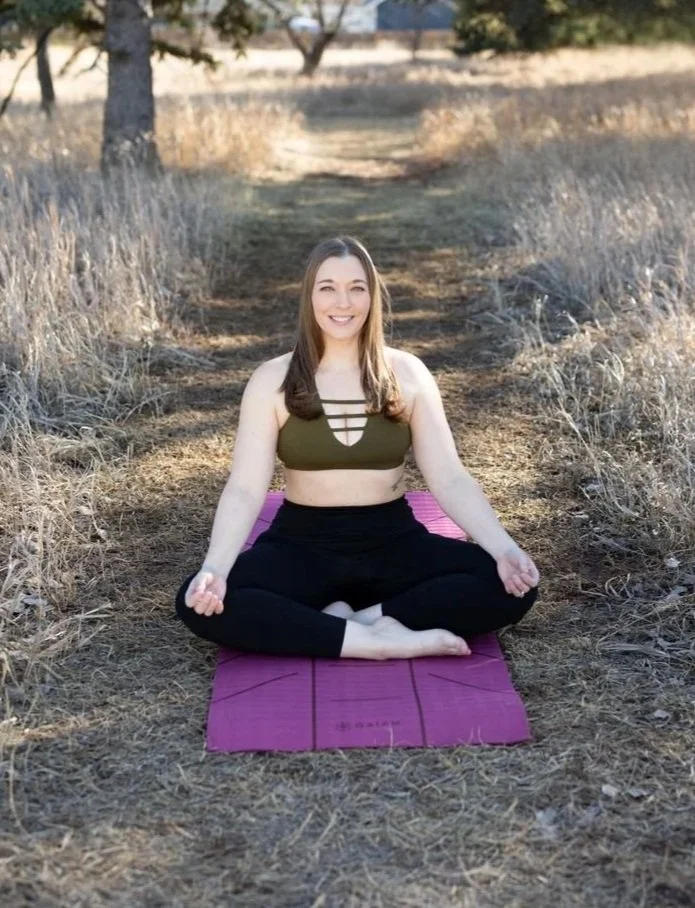
Hi! I’m Laura, your trauma sensitive yoga facilitator! I’m so excited to have you join me over the next 8 weeks. Together we’ll work toward rediscovering safety and connection in the body through education, choice, and movement.
I’m a nationwide Trauma Center Trauma Sensitive Yoga Facilitator (TCTSY-F) and a licensed mental health practitioner across the states of South Dakota, Washington, Oklahoma, & Florida.
LAURA
Course FAQ
-
Unlike typical yoga classes that focus on form or fitness, this approach is about choice, curiosity, and connection. Movements are simple and guided with invitational language, giving you space to notice what feels safe and supportive for your body.
-
You are in the right place. The course was created specifically with trauma-informed principles in mind. You’ll learn how the body responds to trauma and explore gentle ways to rebuild trust, safety, and connection — without pressure or expectation.
-
Perfect. This course is designed for real people with real bodies — not for performance or poses. You’ll be invited to explore movement in a way that feels right for you. Everything is optional, and you’re encouraged to move (or not move) at your own pace.
-
Nope. This course is fully on-demand. You can access each week’s content on your own schedule and repeat lessons as often as you’d like during your access period.
-
Each week offers:
A short educational session (about 10–15 minutes)
A 40–45 minute guided movement practice
Reflection questions or journaling prompts to deepen insight and integration
-
You’ll have access for 4 months - this allows you to get through the full 8 week course with an added buffer. This way you can move through the material at your own pace while maintaining structure and support.
-
Item No. While this course is therapeutic in nature, it’s not a substitute for therapy. It’s meant to complement your healing process — whether you’re in therapy now or simply exploring new ways to connect with yourself.
-
You’re always in control. Every movement and reflection is an invitation, not a requirement. You’re encouraged to pause, rest, or adapt anything to fit what feels right for you in the moment.